I’m gearing up to lauch the Kickstarter for my debut novel, Widdershins, and I thought I would show you a sneak peak of the premiere tier, The Witch, and what inspired it. Sign up here to be notified when the Kickstarter launches on April 30th of this year.
Ten years ago I wrote a guide to witch’s beads, sometimes called Pagan prayer beads or Pagan rosaries. It was informed by custom designs I created for other witches, Pagans and Heathens. For the last 15 years I have run Feral Strumpet, a handmade adornment and altar supply business. I once made custom strands for people who used them in devotion or simply wore them. I also repurposed broken rosary beads, giving them new life.
While I can no longer make those beaded strands as custom designs, I do still make what I call Witches Ladder necklaces—each is a one of a kind sterling silver necklace made with links of semi precious stones, all inspired by the colours of the Orkney landscape where I live.
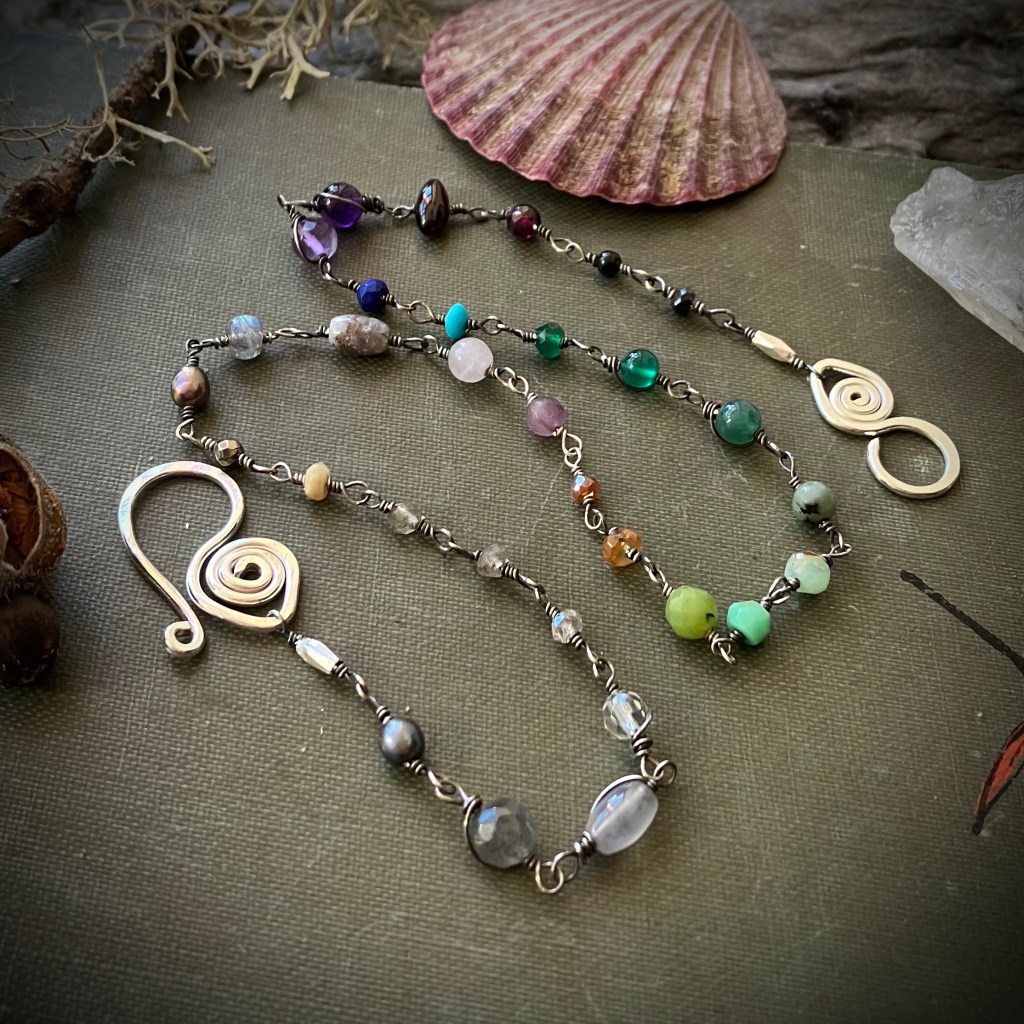
As part of the Widdershins Kickstarter, I will be offering one of a kind, necklaces handmade by me as part of the Witches Tier. [The way Kickstarter works: supporters of a project like Widdershins choose a tier, and each tier comes with unique rewards once the project is funded. Kickstarter is all or nothing—only projects that meet their funding goals are funded.]
The article I wrote in 2016 links this meditative metal working technique used in my witches ladder necklaces to my writing process. Interlocking spirals also give shape to the story of my novel Widdershins!
Here is the article I wrote for my shop blog in 2016
The use of a strand of beads in prayer is universal across almost all faiths, but is well known in the form of the Catholic rosary. I have collected rosaries since I was a teenager. Often I would find them in the street, in thrift shops or at flea markets. I have refurbished them and sold them whole again, reused the fragments but I have also listened to them. Some wanted to be something else entirely, and perhaps this is why they found their way to me.
I have always loved them, perhaps because they are a physical representation of devotions to Mary. They were the first meditations to a goddess—a divine woman and alternative to God the father—I had ever known.
Some witches, like myself, have come from a Christian path and may miss certain aspects of those rituals. A wonderful article about this can be found on Patheos, Retooling the Rosary. The meditative rhythms of the beads reflect the rhythms of the earth. Pagan prayer beads can use many of these for their structure–the four seasons, the phases of the moon, the 8 Sabats or 13 Esbats, the 24 runes in the Elder Furthark. I am partial to nines—the spinning number of three times three. Odin hung on the tree for 9 days and there are 9 worlds in the Norse cosmos. The ubiquitous 9 maidens in folklore also inform my designs.
Even in my secular jewellery—meant simply to be worn and enjoyed—the hand wrapped rosary links I make are very meditative. Some designs take on a devotional feeling as I make them, much like the rhythms of tying a witches ladder.
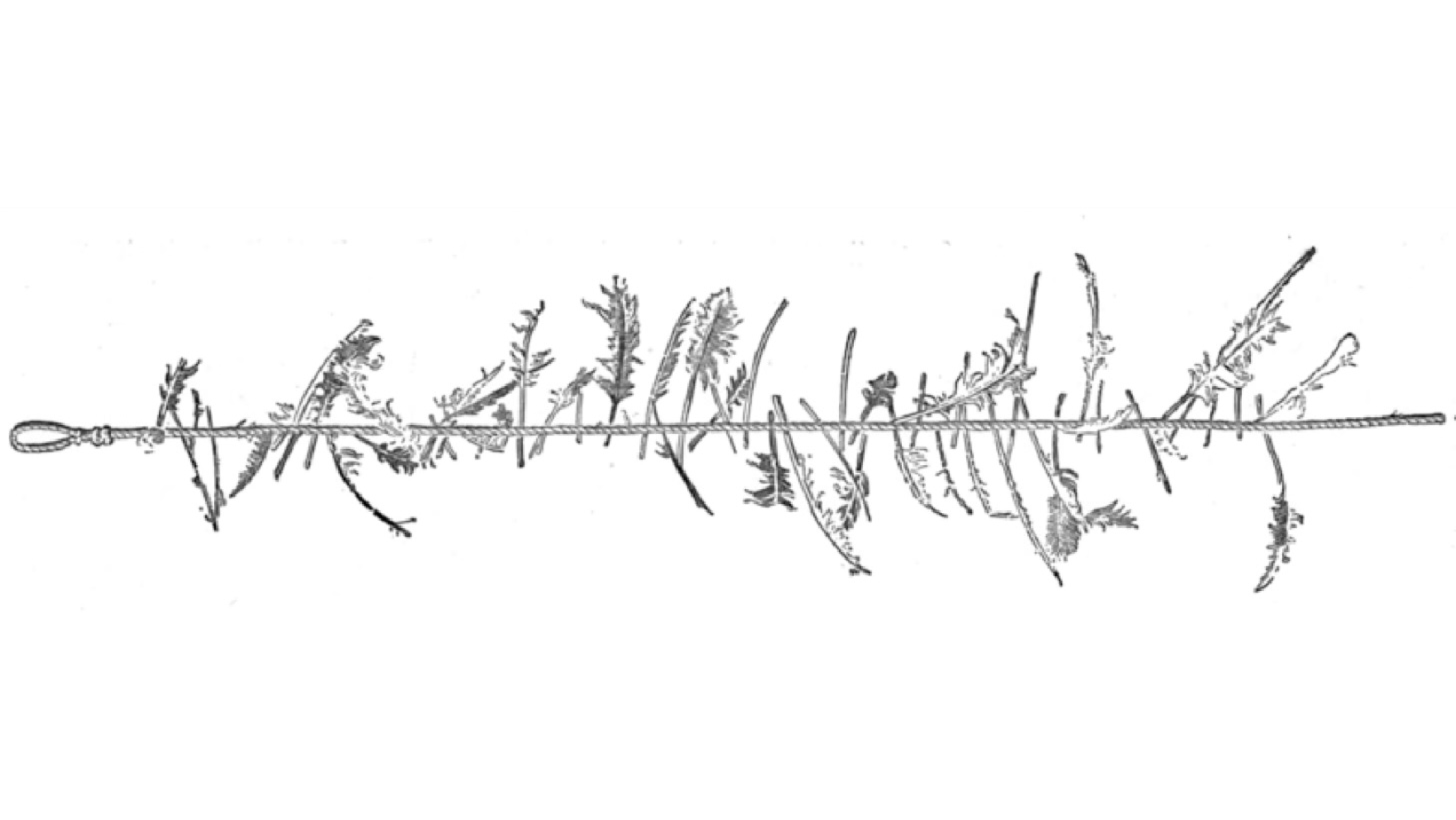
Traditional ladders used knots with feathers attached in binding spells. For instance, to bind an illness the knotted cord was worked up and then thrown into a pond or river–presumably the ailments went with it. [Knotwork is also part of weather magic in Orkney folklore]Any research on the subject is bound (ha!) to turn up the use of knot magic in cursing. We must cast a critical eye on the remnants of history left to us by those who wished to distort our traditions. This work was most likely also used for other benevolent purposes as well as ill. In modern Wicca, the knots are used to seal a working and chanting can be part of it.
A variation on the traditional chant:
Knot one, the work’s begun.
Knot two, my aim is true.
Knot three, it will be.
Knot four, power’s stored.
Knot five, the work’s alive.
Knot six, the work’s fixed.
Knot of seven, the truth given.
Knot eight, will be fate.
Knot nine, the work is mine
[The currently AI-dominated internet will tell you Deborah Harkness, author of the novel A Discovery of Witches, wrote the worlds of this spell—but I’m here to tell you it it’s older than that.)
As in prayer and spell work, words are more powerful if you use your own. In my other life as a poet I have been obsessed by the sestina form, a six-stanza poem that ends in a three line envoy. The end words of each line are rotated through the stanzas, as strands in a braid. This form was arguably invented by a 13th century troubadour, Arnaut Daniel, who called it a cledistat, which means “to interlock”. Here is a wonderful graphic that shows the structure of the sestina as a series of beads or knots on a spiral thread.
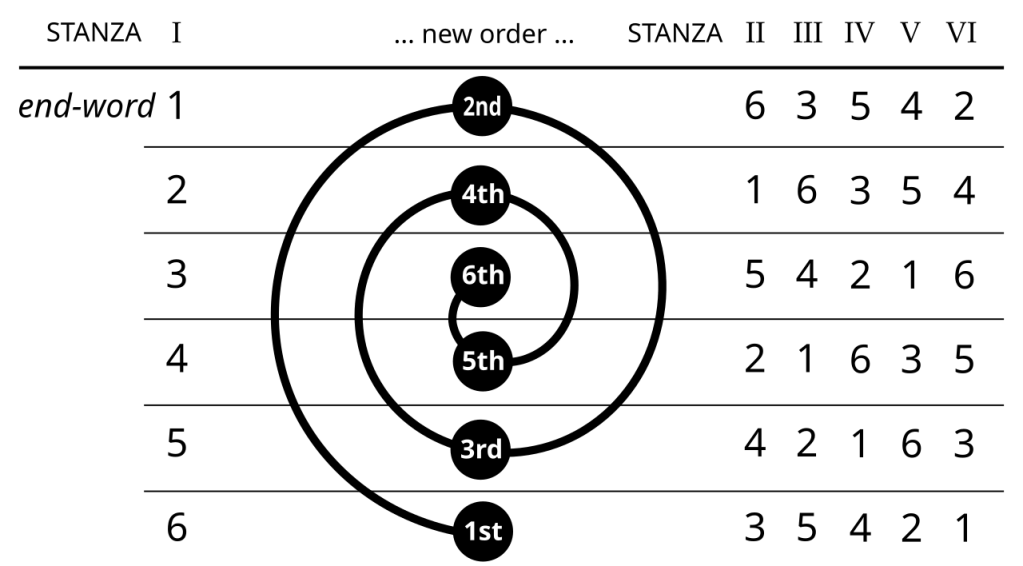
I am constantly amazed at the correspondences between modes of creative work. The same attention to detail that went into writing my sestinas is manifested in my hand wrapped rosary chains. They are from the heart.

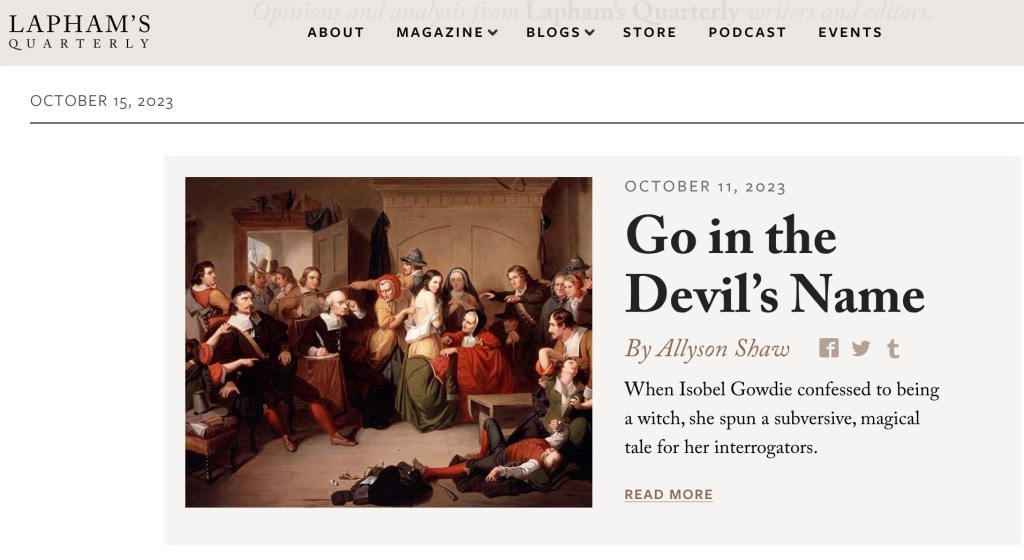
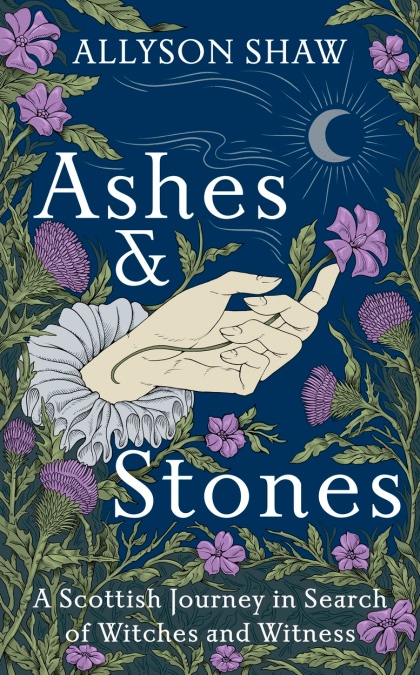

 Allyson Shaw, Author of Ashes and Stones