memory, femicide, and the useful dead 🪶

revisiting the Janet Horne Memorial Stone on the full moon 🌝

Last month I watched She Will, an impressionistic, feminist horror film about Scottish witches set in the Highlands. Aging film star Veronica Ghent travels to a remote location to convalesce and instead finds herself transformed by the darkness she encounters there.

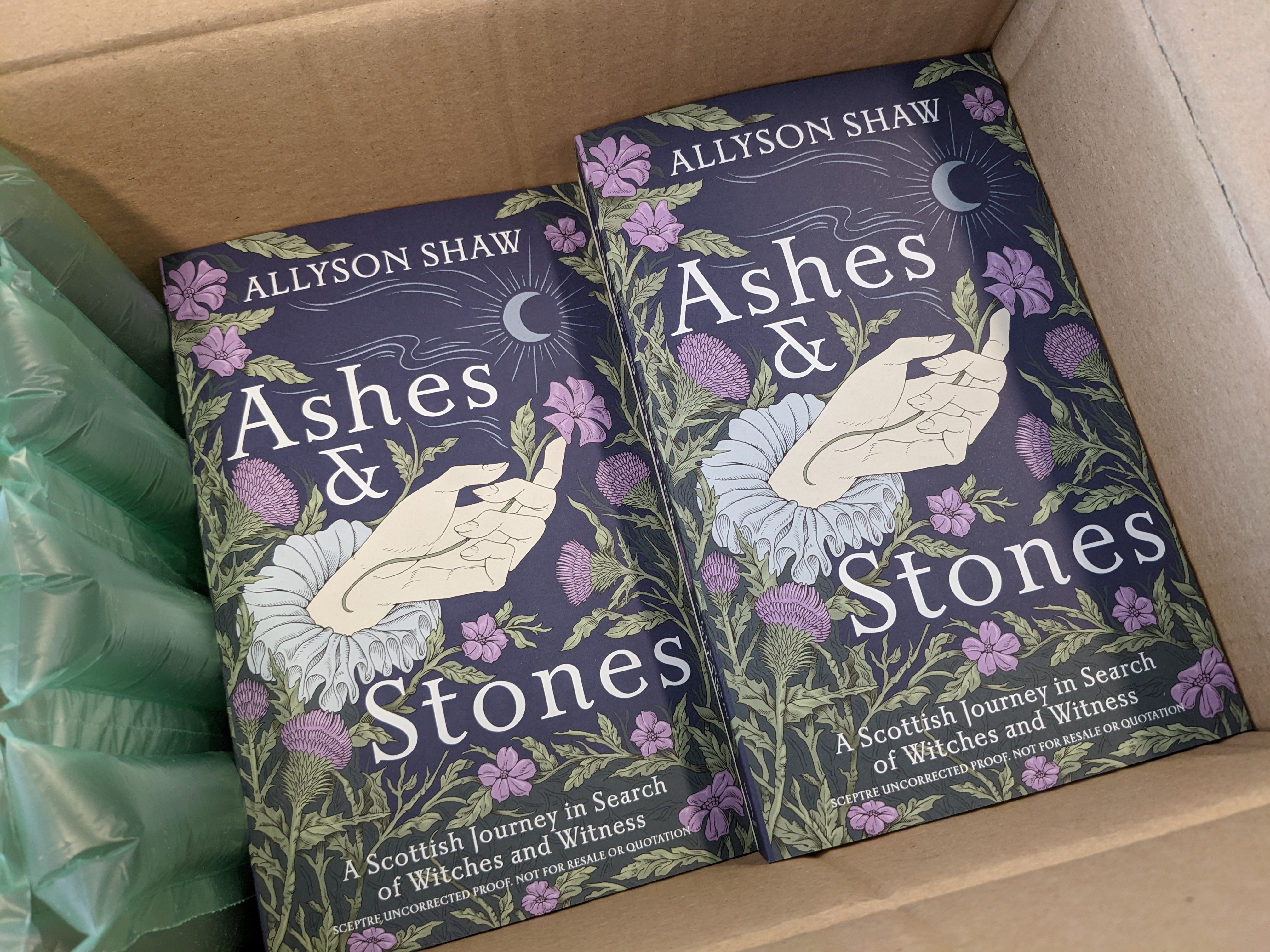
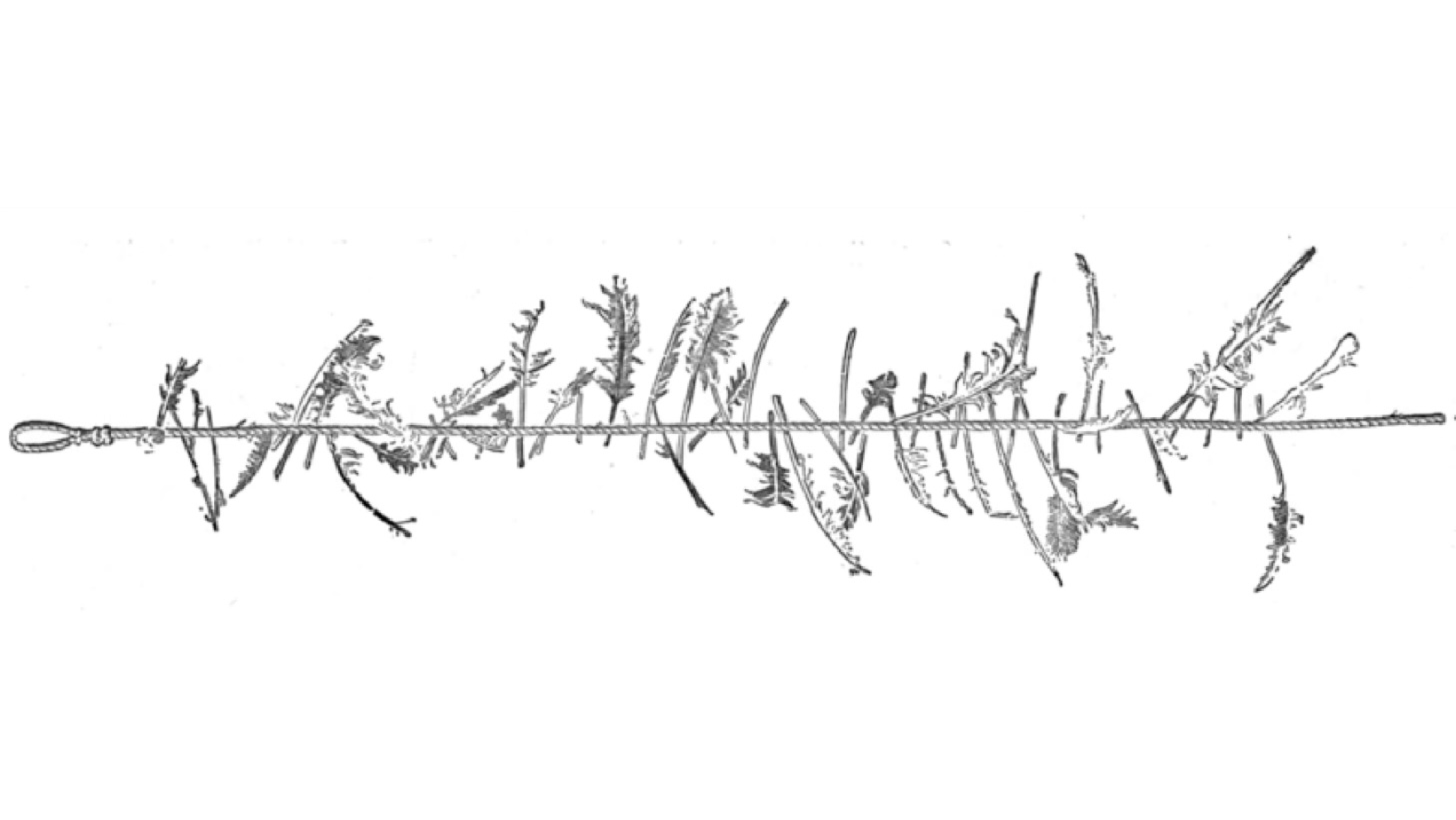
I missed this film when it came out in 2021, but it’s a cinematic companion to my book about how Scotland remembers the witch hunts. The book is called Ashes & Stones. She Will is a film about memory, femicide and the ‘uses’ of the dead. It is also about confronting past trauma—both personal and historical— while dismantling toxic, predatory masculinity. In the film, as in life, these things happen simultaneously. Yet their relationship remains mysterious in the film: ashes billowing through the air are called ‘witch feathers’ by the locals, and the lore surrounding the land claims the death of women hundreds of years ago gives the earth curative properties.

1940s postcard of the Lairig Ghru Pass in the forest where the film takes place. Printed in Dundee—found on @cornovia_postcards@mstdn.business on Mastodon.

I am intimately familiar with the filming locations of She Will. In the ‘art class scene’ Veronica sits with her easel beside Loch an Eilein in the forest of Rothiemurchus. A boulder inscribed with witch marks lies behind her, off camera. Did the film makers know this? There are legends surrounding the atmospheric, 14th century castle on the island. There was once an underwater, zig-zag causeway linking the island to the shore, though this has never been found. Legend also claims it is the ancestral seat of the Shaw clan in the 14th century—if one believes these things.*

The castle on the island in Loch An Eilein. You could say I was visiting relatives—taken on Christmas Day, 2019

I loved the film’s powerful vision of bonds women share with both the living and dead. It’s also a delicious tale of revenge. I only wished it were longer, and that the character of Desi Hatoum, in a show-stopping performance by Kota Eberhardt, had been given more of a story.

The Janet Horne Memorial Stone in Dornoch is part of the film, transported to a woodland setting. I wrote a piece about the Janet Horne Memorial stone for the Association for Scottish Literature’s online journal, The Bottle Imp in 2019. Did the film makers read it? There is probably no way to know, but I like to think they did.

As part of my research for Ashes & Stones, I repeatedly visited the Janet Horne Memorial Stone. Each time I visited, it was different, surrounded by different tributes that have increased since the book was published. Janet Horne is not the name of the woman who supposedly died near the stone’s present location. Everything we know of her vague story was written down one hundred years after her death, in the notes of English occupiers who wanted to portray Highland Scots as superstitious, backward and unable to rule themselves. She is supposedly the ‘last witch’ executed in Scotland but there is no ‘true story’ of Janet Horne’s life or death, only invention.

In my research I found many photos of the stone through the ages, some from the Dornoch Historical Society and others on the internet without attribution. Here is a gallery.


*This notion is put forth in LOCH AN EILEIN AND ITS CASTLE by Alex Inkson M’Connochie. in The Cairngorm Club Journal 014, 1900. 

Have you enjoyed this post? Make a one-time donation!

Choose an amount

£5.00
£10.00
£15.00

Or enter a custom amount

£

Your contribution helps me to keep researching, writing and making work.

Donate

The last Field note from stronsay

Two years ago I set out a plan to write about the folklore of witchcraft in Orkney and its intersection with the lives of Orcadian women accused of witchcraft. During the witch hunts in Scotland, the people of Orkney were slow to demonise witchcraft and the hunts never reached a full blown panic. There are reasons for this that I might unpack further in another Substack post, but the story of the accused is often eclipsed by legend. Scota Bess on Stronsay is an example of a larger-than-life persona—a mixture of storm witch with elements of a creation goddess. The lived reality of an actual woman named Scota Bess, and indeed any historical record of her life, is seemingly lost to the shadow of her tale. I have written about her for paid subscribers of my Substack.

My obsession with the painter John Atkinson Grimshaw is rekindled by the mouldy prints of his work hanging in an abandoned croft on Stronsay. Shipwrecks, mermaid chairs, selkie songs and seal culls…The final instalment of my Stronsay field notes is free to read at my Substack

Ashes and stones cover reveal

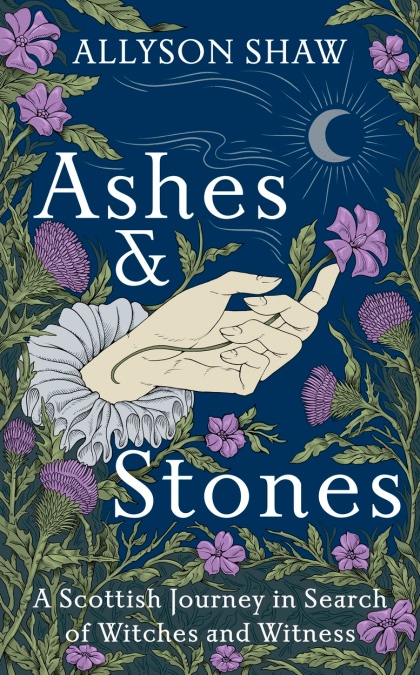
The book cover of Ashes and Stones, showing an illustrated hand holding a herb robert flower, surrounded by thistles with a  moon in the corner.

I’m so pleased to share the gorgeous cover design for Ashes and Stones by Natalie Chen. The illustrator is Iain MacArthur.

It’s summer. I stand where perhaps Ellen stood, in this ground thick with new thistle and long grass. She would have ken this coast in all weathers: in the summer when it was as gentle as a lake and in the winter, with the high winds and stinging salt spray.’

Ashes and Stones is a moving and personal journey, along rugged coasts and through remote villages and modern cities, in search of the traces of those accused of witchcraft in seventeenth-century Scotland. We visit modern memorials, roadside shrines and standing stones, and roam among forests and hedge mazes, folk lore and political fantasies. From fairy hills to forgotten caves, we explore a spellbound landscape.


Out 19 January, 2023. Preorder Now:

Available at Watersones

Blackwells (offers free shipping to the USA)

Bookshop.org

Amazon.co.uk

Join my Patreon as a Valiant Witness and receive a signed copy of Ashes & Stones. I ship worldwide.

Clearing Space for Subversive imagination

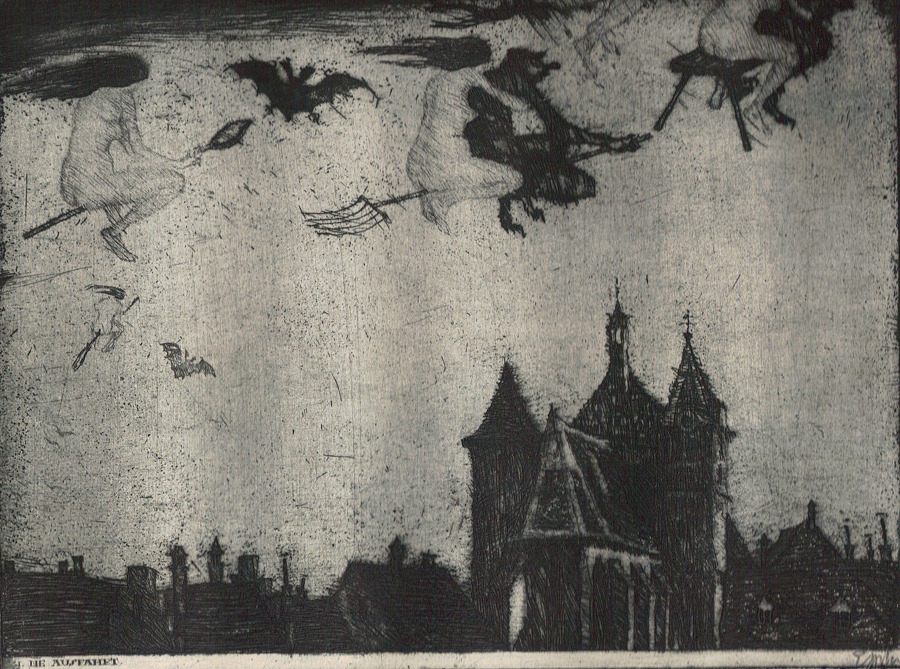
Stefan Eggeler illustration for Gustav Meyrink’s Walpurgisnacht

My newest workshop, Reclaiming Our Monsters, pushes boundaries and clears space for subversive imagination. There are still some spaces left–tickets available at Eventibrite. April 30th, 7pm GMT via Zoom.

This workshop is driven by feminist ideas, reworking the monstrous into new empowering guises. It’s also a way to explore folk horror as a wider genre with space for women and non-binary people.

April 30th is the second Halloween of the witches’ calendar. The veil is thin, the dead walk among us, werewolves are born and all good witches fly to the Brocken. 

In films, TV and books I’ve always had sympathy with the demonised feminine. I drank up the power in these images, and it has served me well. Not that I’m older, I realise this was a kind of crone-medicine. The crone embraces a lived duality: she knows what she is, are even if the dominant culture and history says she’s extraneous, voiceless and grotesque. 

There is a lot going on in the world right now that is truly monstrous. In times of upheaval and uncertainty, what messages do we amplify and share? What realities do we tend? Writing through disaster capitalism and the death throes of patriarchy isn’t a hobby or pastime, it’s a mode of survival and resistance.

How do we know who we are? Write must it—Write it out like the Cailleach on a night raid with her retinue of the dead. Writing it out like a spell, like a draught of blood. 

From where I stand writing may be my only power against the forces of destruction that envelop us. It is the sword I have sharpened over decades in the forge of my own raging intellect, my furious imagination. 

Teaching is my vocation. It’s a devotional work for me and something I’ve done in and outside of hallowed halls of academia and on the streets and in community centres. I’m thrilled that technology, though far from perfect, allows me to teach others online across the world. 

In this two hour workshop we’ll explore the monstrous through an intimate, personal perspective. We’ll embrace the persona of the outsider, the not-quite-human, using subversive world-building, and writing through the eyes of the cursed, the spellbound, the exiled. You’ll need pen, paper and a six sided dice. Join us!

Reclaiming Our monsters: A writing workshop

Online via Zoom, April 30th, 7pm gmt Tickets are £25 available from Eventbrite

In this two hour workshop we’ll explore the monstrous through an intimate, personal perspective. We’ll embrace the persona of the outsider, the not-quite-human, using subversive world-building, and writing through the eyes of the cursed, the spellbound, the exiled. 

April 30th is the second Halloween of the witches’ calendar. The veil is thin, the dead walk among us, werewolves are born and all good witches fly to the Brocken. 

Let’s celebrate and write stories together. 

For this workshop you’ll need a pen, paper and a six sided die. 

 This workshop is driven by feminist ideas, reworking the monstrous into new empowering guises—but also a way to explore folk horror as a wider genre with space for women and non binary people. Every workshop I design is an offering of community, creative fuel and fire to the writers and makers around me. And this one is GONNA BE HELLA FUN. 

Enroll now.

“The Bell that Never Rang” — September’s New Moon Tale

Every month I write a new fairy tale based on an old Scottish tale, and I share it with my Patrons on Patreon. This month’s New Moon tale is “The Bell that Never Rang” It is a fairytale laid over the psychogeography at the centre of Glasgow. I have always loved Glasgow. Tourists may visit Edinburgh—and it is a lovely place—but if I had to choose a city that is the heart and soul of Scotland, it would be Glasgow. “St. Enoch” is a name you see in the city, and I always assumed it was the name of some random, male Christian saint who converted the Picts. But Enoch is a woman—the first recorded rape victim in Scotland. In this tale, I’ve shifted the “facts” of the prism of her life to let the light through another facet.

Her sacred places were many in the city and they are all now lost, renamed and buried under shopping malls and roundabouts. She was the mother of the founder of Glasgow, Saint Mungo. His name is perhaps more famous now because of the Hospital for Magical Maladies in the Harry Potter books, which is named after him.

School children used this mnemonic device to remember his miracles, and I have used one of them to name this story:

Here is the bird that never flew

Here is the tree that never grew

Here is the bell that never rang

Here is the fish that never swam

The image of Saint Tenu in the collage above is taken from an icon in the Mull Monastery by Friar Serafim.