In this two hour workshop we will use the iconography of the tarot’s major arcana as prompts to memory and personal narrative.
You don’t need to know how to read tarot to participate, but those who do work with tarot will find a new way to use your insights with this divination tool to broaden and deepen your writing.
I have thirty years of experience working with tarot. As a child, my first conversations with the cards were as a mysterious game. In this workshop we will rekindle a bit of this wonder as we delve into our pasts on the page.
This workshop is a safe space for women, people of colour and LGBTQ+ people. While we may discuss our writing process, any sharing of our written work will be voluntary.
At the end of the workshop you will have sketched out a short piece of memoir writing with a plan for development and revision.
You will need paper and pen, or something to input text. The major arcana cards from a personal tarot deck is optional—an online deck is available here. https://randomtarotcard.com
Allyson Shaw brings ten years of experience teaching writing at University of California and city colleges in the USA. She has delivered numerous community based workshops throughout her career, including online workshops for the Taibhsear Collective. Recent publications include Fireside Quarterly, Rituals and Declarations, and Fiddlers Green. Her creative nonfiction book, Ashes and Stones: a Scottish journey in search for witches and witness, will be published by Sceptre, the literary imprint of Hodder & Stoughton, in January 2023.
On Friday 24 June 2022, the US Supreme Court overturned Roe vs. Wade—making a human right into a crime. The legal precedent for the catastrophic decision has witch hunting at its heart. The leaked Alito document circulated on 10 February, 2022 was unaltered in the final decisions. I have looked at this chilling statement setting out rights to the ‘unborn.’ Alito refers to two treatise from 1673 by a 17th century barrister and judge, Matthew Hale. Hale’s misogynist views may be part of early modernity but they have no place in a contemporary legal argument. Hale believed that rape within marriage was not a criminal act. He was also a judge at the witch trials of Bury St. Edmunds, condemning at least two women to be executed for witchcraft
The wealthiest and most powerful nation on Earth has employed a legal argument from a witch hunter to justify this attack on women’s rights. This is not just shades of Atwood’s Gilead coming to pass, this is history repeating.
Coming of age in the USA, I never took my ability to access safe and legal abortion for granted. But as a teenager, I had no such illusions that I would be able to afford or access an abortion, despite being a survivor of sexual violence. It was a harrowing, vulnerable time for me, an experience I know millions of girls have faced and are currently enduring. In the US, the loss of this fundamental right will mean millions more will suffer and die trying access safe abortion.
The wealthiest and most powerful nation on Earth has employed a legal argument from a witch hunter to justify this attack on women’s rights. This is not just shades of Atwood’s Gilead coming to pass, this is history repeating.
Rape is the most under reported crime in the world, with statistics varying widely— as many as one in five women will be raped in her lifetime, perhaps more. The repeal of Roe vs. Wade will affect the survivors in life threatening and traumatic ways. Women of colour, the young, vulnerable and poor won’t have the resources to find other ways to access healthcare.
Birth control is not 100% effective. Abortion allows women to control their lives and fates, to create a human being when they will be able to care for them, when the child will be wanted and welcome.
Never Again. I can’t believe that a new generation of young women will have to become acquainted with the horror of this human rights slogan, coupled with the image of a wire hanger from the years before abortion was legal. The terrible black and white photos of women bleeding out, dying alone after they had been butchered will circulate again–no longer artifacts of a backwards time but evidence of the very real danger of back alley abortions.
In the late 80s and early 90s I was an abortion rights activist and clinic defence volunteer. I have faced down zealots who threatened and cursed me in between prayers for the mythical ‘preborn.’ Sleep deprived, adrenaline filled, and indoctrinated with wild notions of evil women murdering babies, these men fuelled their holy war with hatred. They were terrifying, yet we stood our ground.
Many British folks I’ve spoken to think with relief, at least it isn’t us—we are above such things, yet abortion has not yet been decriminalised in Scotland. Consider the ramifications of the USA, this superpower of a nation, the global epicentre of cultural and tech production, the seat of multinational capital—carving out a vision of the future where women do not matter. The US is now a place where a few unelected, robed individuals take aim at the many of the gains made in the last 100 years that made the country and the world safer for women and queer folk. To quote Angela Davis, “If they come for me in the morning, they will come for you in the night.” They are coming. The extreme right have an agenda and an entrenched, powerful cabal to do their bidding. They have come for women’s bodies and will come for queer rights next. Our struggles are inextricably linked.
When I set out to write this book on the witch hunts in Scotland, I was not thinking of that formative moment in my life as an abortion rights activist on the front lines where I faced an army of misogynists who believed God was on their side. I was only thinking of the dead, and the monuments all over Scotland that kept insisting I write, remember, and try to set the record straight. I didn’t realise that the atrocities I researched and recorded over the last five years would have a terrible resemblance to the Christian right wing in the US and their power centre in the Supreme Court. Then, as now, the marriage of church and state proves deadly for women, indigenous peoples and queer folk.
In the late 80s, I had friends who prepared for this eventuality that has come to pass. This was before the morning after pill was available, and access to abortion was costly. We were considering herbs and alternatives, building networks that could transport women to places where they could get a safe abortion, and donating and fundraising for these things. This is still happening, even after I am no longer in the US. Here is a wonderful list from my favourite astrologer (I don’t believe in astrology, but if you read Brezsny you will know how fascinating his horoscopes are.)
My book, Ashes and Stones, out from Sceptre in the UK in January 2023.
When I began writing about this history over four years ago, an apology from the church seemed an impossibility. Very few people were openly discussing this history, save academics and ghost hunters. The work for a pardon hadn’t yet begun, and the idea of a national monument had been discussed and abandoned several years earlier before being picked up again.
The Church intends to apologise, and this comes on the back of the First Minister Nicola Sturgeon’s historic apology to the accused on International Women’s Day this year.
At the Church of Scotland’s General Assembly at the end of May, the elders voted unanimously in favour of a motion for a formal apology to those accused of witchcraft. The motion was put forward by Rev Prof Susan Hardman Moore in conjunction with a paper written by Professor Glen Pettigrove for the theological forum in response to a request from Remembering the Accused Witches of Scotland. The paper, “Apologising for Historic Wrongs,” begins by focusing on Jesus’ teachings of about anger and reconciliation and then summarises opposing arguments by putting forth a series of hypothetical objections that perhaps reflect the intellectual resistance those in favour of an apology have met—for instance, a historical, group apology does not accept personal responsibility for past wrongs but instead stands in solidarity with the victims. It argues that an apology could impose modern ideas on the history of the witch hunts, and witch hunters were doing their best despite their mistaken ideas. “Surely it is unfair to blame them for piety, patriotic loyalty, or benevolent concern for public welfare.” I would argue that many at the time did not see the actions of the church as pious or benevolent, and even when modern scepticism entered the dialogue in the late 16th and early 17th centuries, witch hunting continued in Scotland.
The current church is not the same entity as the Church of Scotland in the 16th-18th centuries. It is product of schisms and mergers and is a different organisation than the historical Church that conducted witch hunts. Yet church services are conducted in buildings that still have jougs, or iron neck rings, attached, ‘witches rings’ used to chain the accused to the church wall or steeples where women were imprisoned while being interrogated. Scripture used to kill thousands is still part of the sacred text used in worship. In the eyes of many Scots, including myself, the contemporary church is tainted by the terrible injustices in its larger history, regardless of the specifics of the organisation.
The paper goes on to present a persuasive argument about reconciliation and neighbourliness.
For many within our community, when [our neighbours] think of the church they think of an organisation with a history of bad behaviour: they think of racism, sexism, homophobia, greed, hypocrisy, inquisitions, witch-hunts, crusades, religious bigotry, sectarianism, social exclusion, child abuse cover-ups, complicity with imperialism, siding with the powerful against the vulnerable, and the like. They think of our worst qualities at our worst moments. And given how bad we have been at those moments – and how imperfect we remain even at our best – they quite reasonably have something against us.
The paper concludes, “it is possible to stand in solidarity with the victims and affirm current community standards even if we have not determined who all the bad actors were, what motivated them, and whether they should have known better.” The apology also becomes an invitation to self-scrutiny and vigilance—a commitment to making sure past wrongs are not repeated.
I will be curious to see what the final language of the apology will be and just how much clarity there is in it, yet the impulse is there and it’s a huge shift. It matters deeply to me. What does it mean to contemporary Scots or Christians alienated from the church? While I have entered into churches over the past twenty years to observe art, architecture or relics, I have not gone in to worship. Yet as a child and young woman I was a devout Christian. I read the Bible regularly and sought out the teachings of Jesus, wondering what was most authentic in the Bible. I read the Gospels of Thomas and Mary Magdalen and began to question the assumptions Christians made about the “word of God.” My early poems—where my life began as a professional writer— were part of this interrogation. I attended a church in California that had many queer people like myself in it. I would sit during the service and weep. Back then, I thought perhaps they were holy tears, and now I wonder if it was ancestral trauma, a deep understanding that historically these Christian words and ideas had been used to kill thousands.
What was I doing there? The more I found out about the church’s history, the less I felt I could embrace any Christian teachings. I left, but I kept looking back. Why can’t you make this right, I wondered whenever I would pass a particularly quaint little chapel or a TRY PRAYING billboard.
As I researched and travelled around Scotland while writing Ashes and Stones: a Scottish journey in search of witches and witness, I was amazed at the role the church played in this machine of mass death. But what I also found were voices and acts of resistance to this policy of women-killing. In the 16th-18th centuries, this belief in satanic bargains and women’s moral weakness was not ubiquitous even within the church. It’s important to acknowledge that the witch hunts were not just a product of an unenlightened past but of a horrifying abuse of power, a cynical consolidation of patriarchal beliefs and a stamping out of a certain animistic spirituality that resisted church control. Yet there were many who subverted this in their own ways.
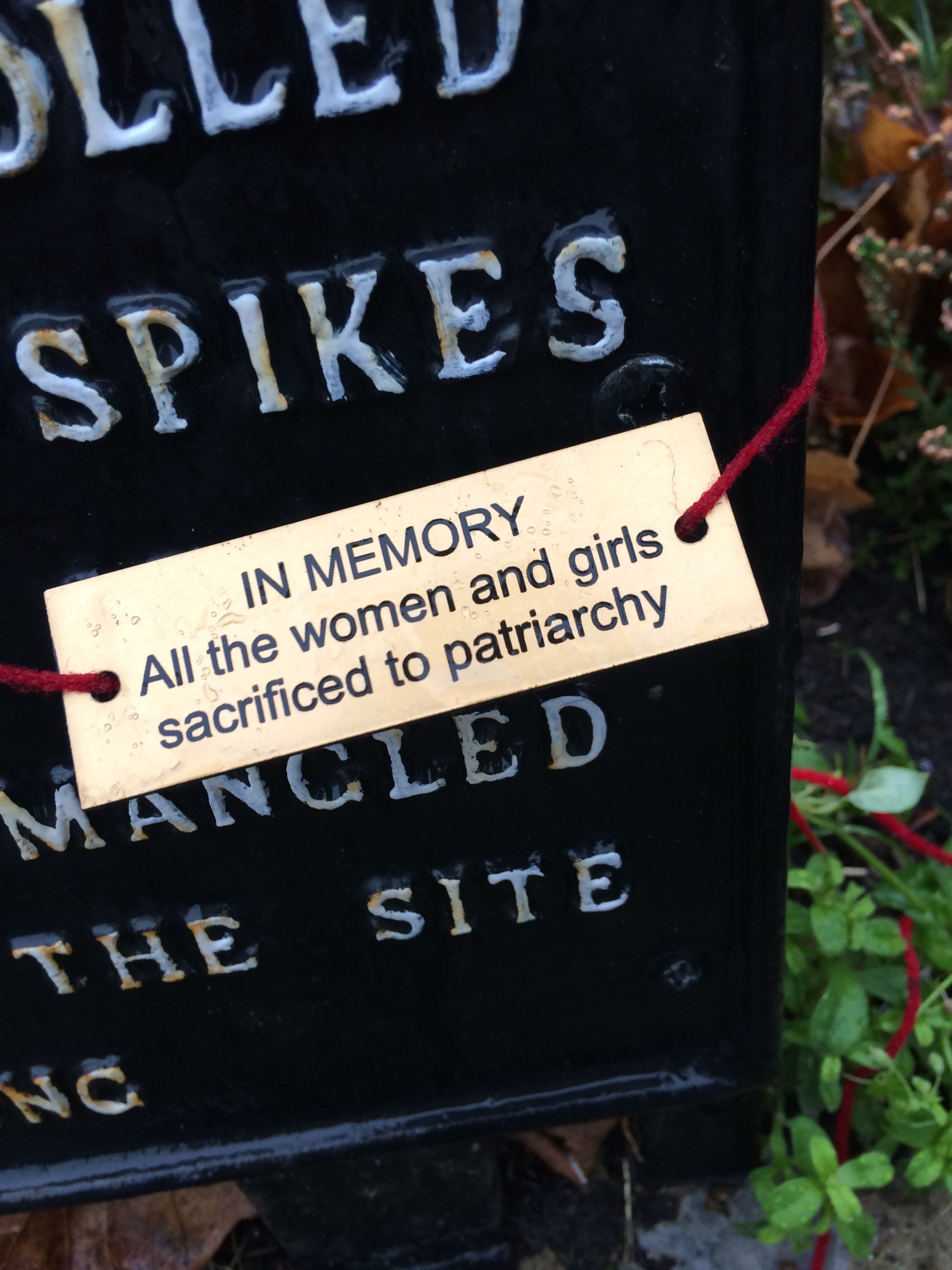
This solidarity with the accused continues into the present with Scottish people maintaining, updating and creating memorials—sometimes in private, under cover of darkness or without any institutional support. These stories are part of the book I have just finished writing.
The imminent apology has left me to wonder if I would ever enter a church again to pray and worship. Would I be welcome and what or who would receive my prayers?
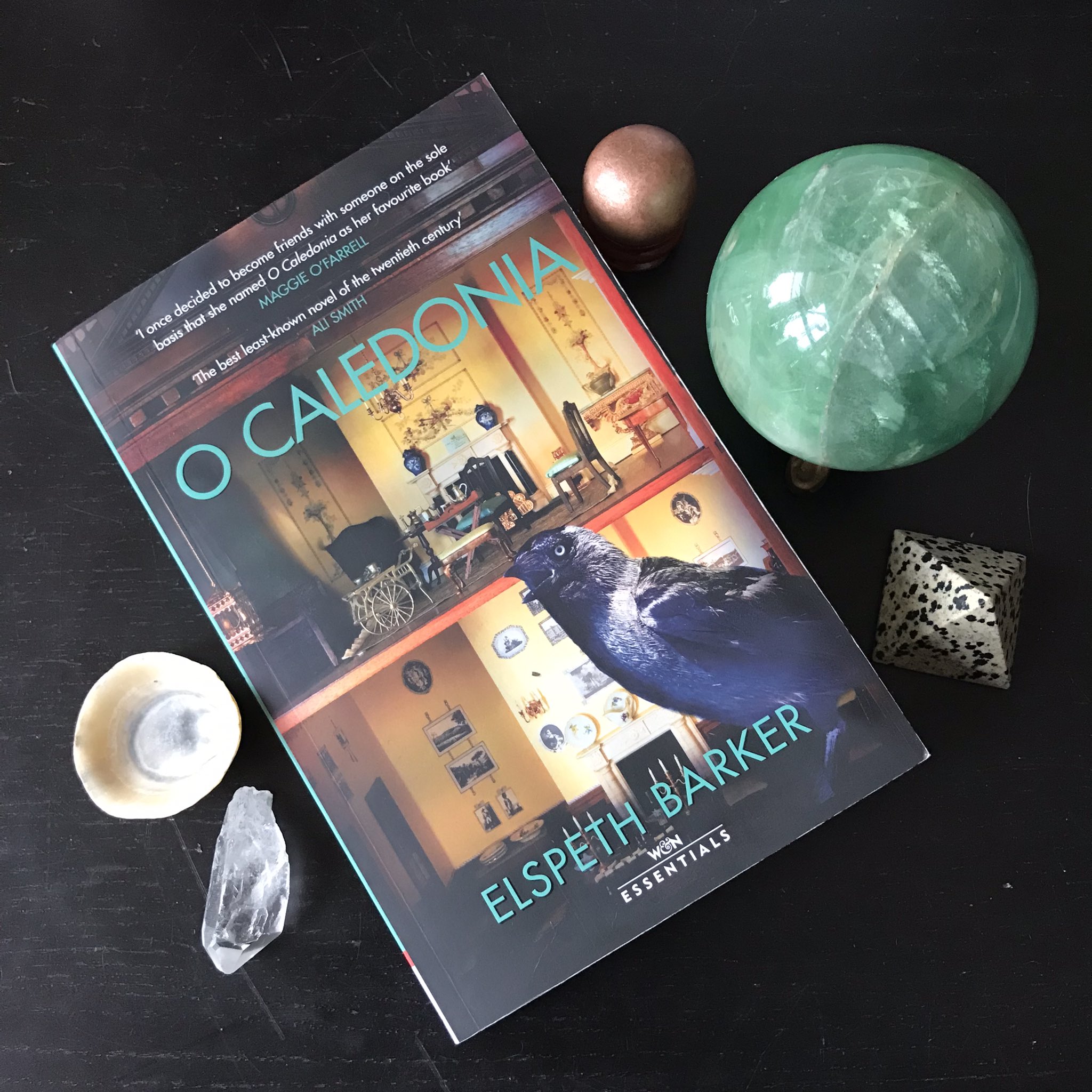
I just read that Elspeth Barker died last month, and I’m still recovering from the perfection of her only novel, O Caledonia. Heartbreaking and hilarious—why had no one ever told me about it before? I recognise Janet, the ill-fated protagonist, as myself. I see vividly in this book the enchanted, cursed landscape of Northeast Scotland and the steely, unforgiving nature of this place. I have never read a book that was written with the delicious precision of language—words with the power to summon a place and time as if the reader is living it beside the writer and the people, animals and land of the book. This is no hyperbole—Barker was a sorceress.
I’m writing to you on International Monuments and Sites Day. It’s true there is a day for everything, but when you’ve spent the last four years exploring and recording neglected or missing monuments, this moment seems significant. International Council on Monuments and Sites along with UNESCO chooses a theme each year. 2022 is ‘Heritage and Climate.’
There are events planned all over the world, but not in Scotland. I wonder what would Heritage and Climate mean to Scottish Heritage? The very same forces that have destroyed archeological sites or left them vulnerable are the same forces of myopic capitalist greed that is destroying the earth.
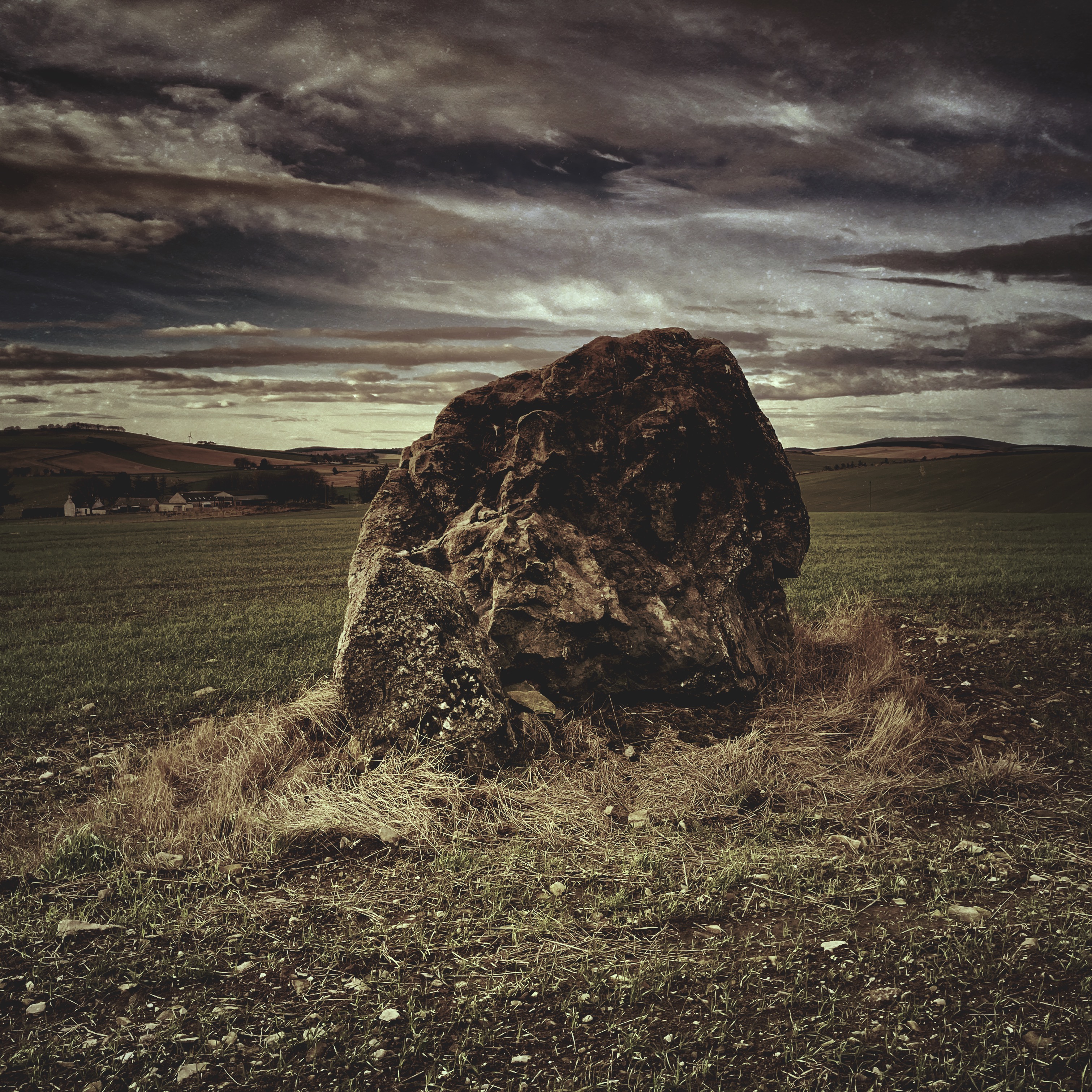
Much of my research has focused on carlin stones or sites with ‘witch attribution.’ Carlin means ‘old woman’ in Scots, but can also mean witch. The two meanings occlude each other. These unremarkable places in the landscape are complex cultural sites. They are often stones on private land. Some carlin stones have scars of holes where dynamite was to be inserted, yet they survive. Others were blown up or buried, their stories forgotten. The carlin or witch stones that survive are the last receptacles of stories, the stand-ins for monuments to atrocity where there are none.
My local carlin stone in Fortrie.
What might it mean for Scotland to claim these places, trespassing on private land if need be, on this International day? Might we dress our stones with flowers and song, crystal grids made with found quartz and pebbles? Could we pour over them water from a sacred well? On this day, let’s bring back pilgrimage to these places. Sacred sites are everywhere. Where is your closest carlin stone, sacred well or place of great mystery? These need not be part of the official ‘Heritage’ collection of real estate, and it probably isn’t. No doubt you can walk to it, even if you have to cross that liminal boundary of public and private land. If you don’t know of a site that close, find one, claim it and know it. Tell its stories. Share them we me, us. I want to hear them.
This process of reclamation was a large part of my upcoming book Ashes and Stones: A Scottish Journey of Witches and Witness, out from Sceptre in January 2023. I travelled the length and breadth of Scotland looking for the witch in the Scottish landscape, and the places we share with those killed during the hunts—the places that were once claimed by the dead.
A short video of my journey across Scotland researching memorials to those accused of witchcraft is below.
After I first saw the Mystic Fire VHS video copy of the The Witch of Positano in 1999, I went looking for Vali Myers, the Australian artist who lived in Italy and created an animal sanctuary there.
I searched for her landscape through a limoncello haze when I was in Positano at the turn of the century. My notes are scant, road weary. I long to go back.
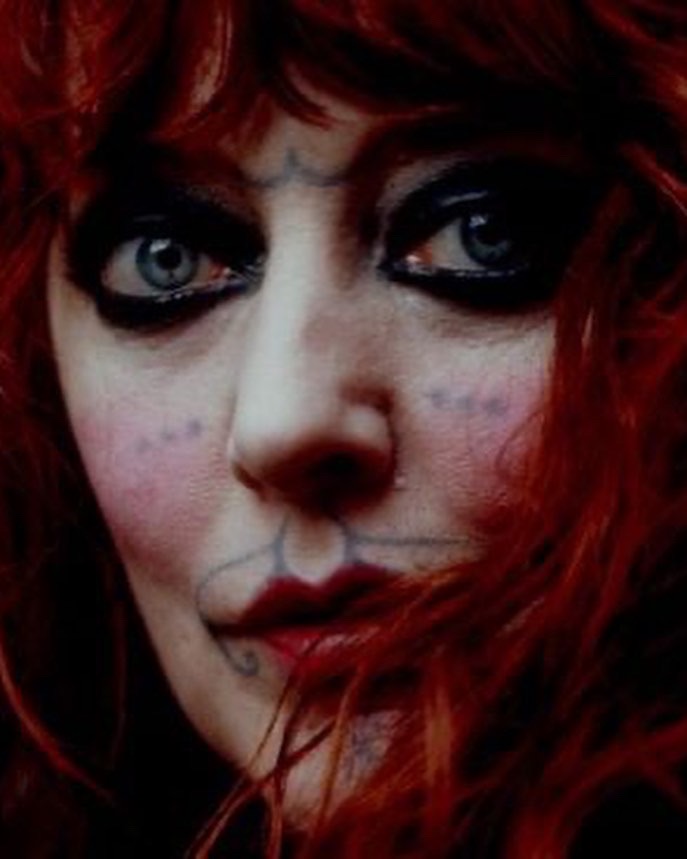
Her visionary self portraits hit me hard, a dark mirror of a wilder self. In the last two decades she’s become the darling of the witch wave with her photogenic, vagabond style and her various totem animals. She was a Warhol kind of witch, a glamouring sort. Her images multiplied on the internet still ask me why so domesticated? Now we are reflected back to ourselves constantly, it is difficult to imagine what this invention entailed. I wonder what magic was seeded in her self-imaging? It is a thing of lasting power.
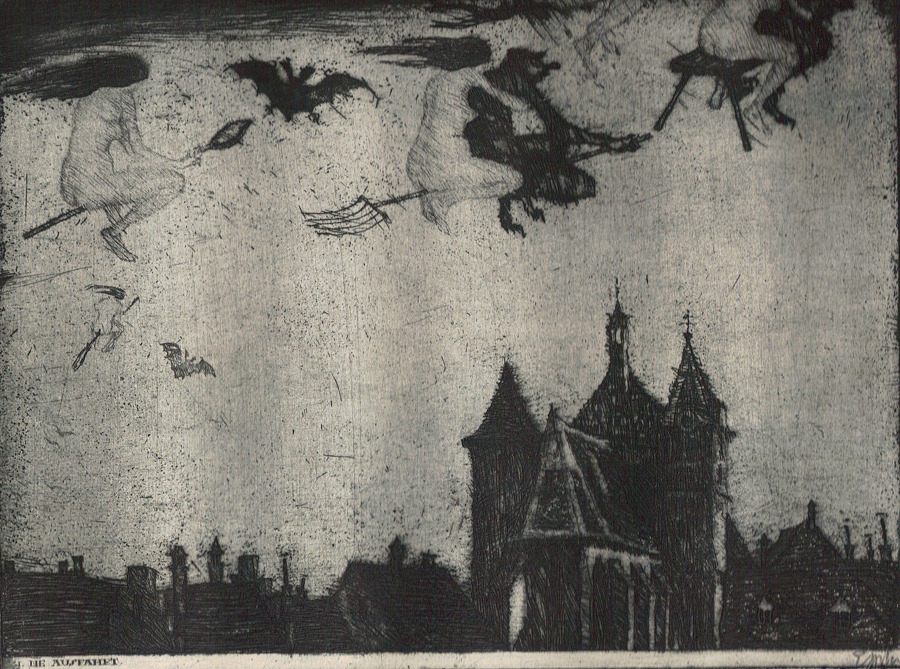
Stefan Eggeler illustration for Gustav Meyrink’s Walpurgisnacht
My newest workshop, Reclaiming Our Monsters, pushes boundaries and clears space for subversive imagination. There are still some spaces left–tickets availableat Eventibrite. April 30th, 7pm GMT via Zoom.
This workshop is driven by feminist ideas, reworking the monstrous into new empowering guises. It’s also a way to explore folk horror as a wider genre with space for women and non-binary people.
April 30th is the second Halloween of the witches’ calendar. The veil is thin, the dead walk among us, werewolves are born and all good witches fly to the Brocken.
In films, TV and books I’ve always had sympathy with the demonised feminine. I drank up the power in these images, and it has served me well. Not that I’m older, I realise this was a kind of crone-medicine. The crone embraces a lived duality: she knows what she is, are even if the dominant culture and history says she’s extraneous, voiceless and grotesque.
There is a lot going on in the world right now that is truly monstrous. In times of upheaval and uncertainty, what messages do we amplify and share? What realities do we tend? Writing through disaster capitalism and the death throes of patriarchy isn’t a hobby or pastime, it’s a mode of survival and resistance.
How do we know who we are? Write must it—Write it out like the Cailleach on a night raid with her retinue of the dead. Writing it out like a spell, like a draught of blood.
From where I stand writing may be my only power against the forces of destruction that envelop us. It is the sword I have sharpened over decades in the forge of my own raging intellect, my furious imagination.
Teaching is my vocation. It’s a devotional work for me and something I’ve done in and outside of hallowed halls of academia and on the streets and in community centres. I’m thrilled that technology, though far from perfect, allows me to teach others online across the world.
In this two hour workshop we’ll explore the monstrous through an intimate, personal perspective. We’ll embrace the persona of the outsider, the not-quite-human, using subversive world-building, and writing through the eyes of the cursed, the spellbound, the exiled. You’ll need pen, paper and a six sided dice. Join us!
Excerpt from Nicola Sturgeon’s speech on International Women’s Day
I longed for an authentic glimpse of the women executed for witchcraft hundreds of years ago, and I went out into the landscape to meet them. Their voices and lives became braided with my own in moving and unexpected ways. I’m excited that Sceptre will bring this humanising perspective on the accused to a wider audience.’
–Allyson Shaw
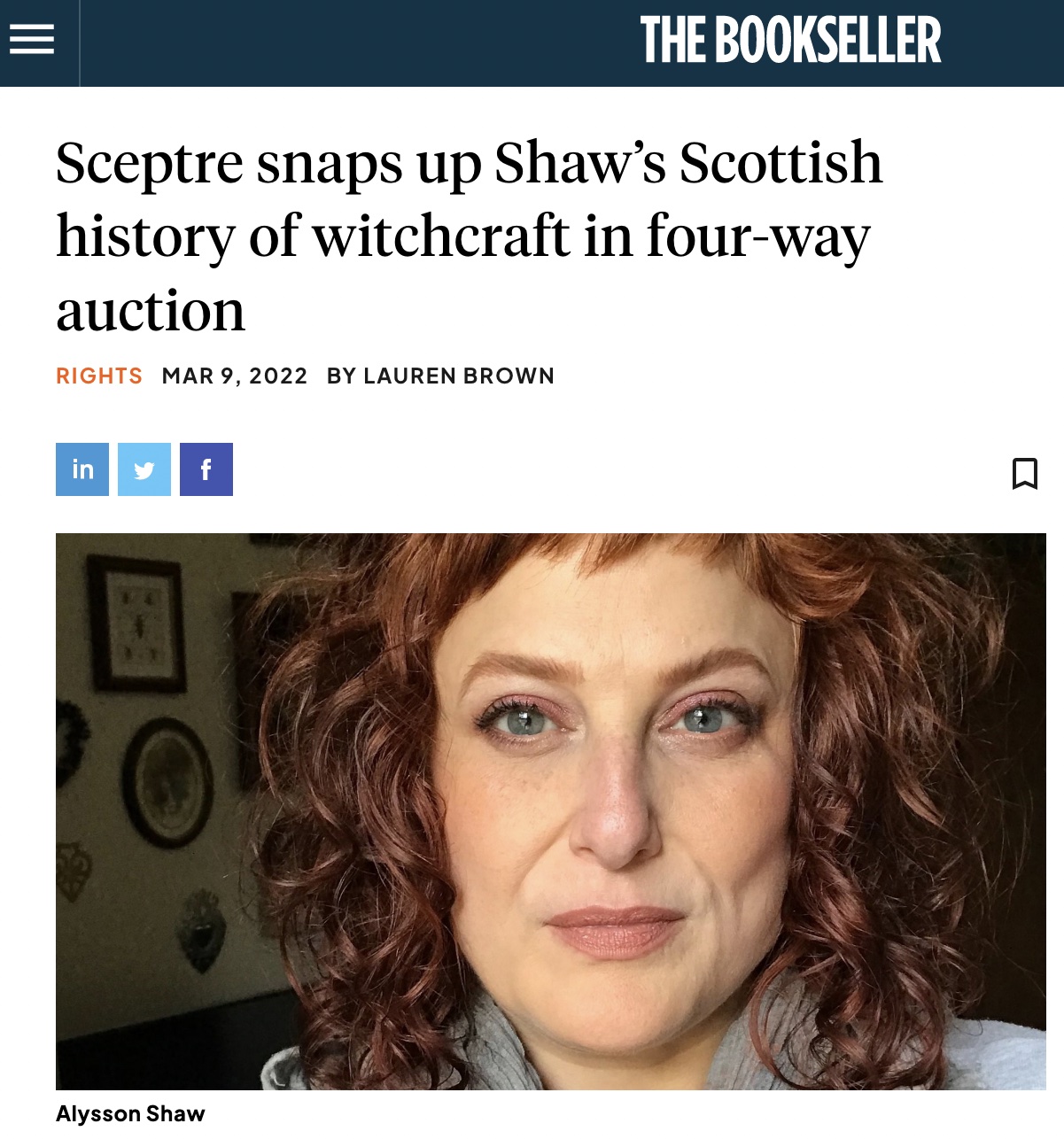
The day after Nicola Sturgeon issued a formal apology for those accused of witchcraft in Scotland, Sceptre has publicised the press release for my book on the same topic. It is wonderful timing. Sturgeon’s apology is healing not only the past but present and future misogyny. I am moved to tears and so proud to be Scottish right now.
From the Ashes and Stones trade announcement:
Ashes and Stones is a moving and personal journey, along rugged coasts and through remote villages and modern cities, in search of the traces of those accused of witchcraft in seventeenth-century Scotland. We visit modern memorials, roadside shrines and standing stones and roam among forests and hedge mazes, folk lore and political fantasies. From fairy hills to forgotten caves, we explore a spellbound landscape.
Allyson Shaw untangles the myth of witchcraft and gives voice to those erased by it. Her elegant and lucid prose weaves threads of history and feminist reclamation, alongside beautiful travel, nature and memoir writing, to create a vibrant memorial. This is the untold story of the witches’ monuments of Scotland and the women’s lives they mark. Ashes and Stones is a trove of folklore linking the lives of modern women to the horrors of the past, and it is record of resilience and a call to choose and remember our ancestors.
Charlotte Humphery, Senior Commissioning Editor at Sceptre, who is working with Francine Toon’s authors while Toon is on parental leave, says: ‘Ashes and Stones is a beautiful exploration of a dark history that is often forgotten or trivialised. Thousands of women were murdered by state forces during the witch hunts and Allyson Shaw revives some of these women – through historical records, physical presence and informed imagination – with tenderness and compassion. In this book, she has created her own memorial that is rich with magic of folk lore and the power of the Scottish landscape and resonant with the politics of today. We are delighted to be publishing this brilliant and important book.’